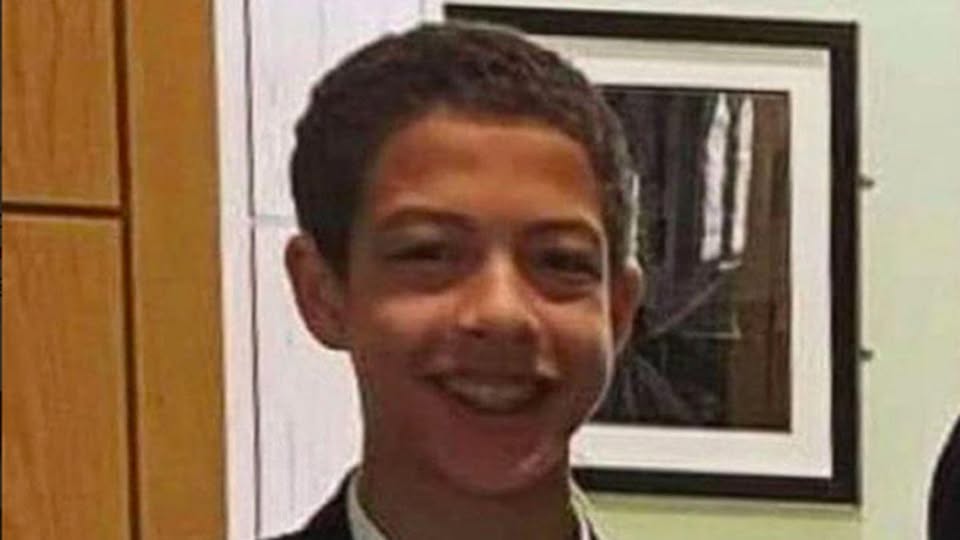
Noah Donohoe was only fourteen — a boy with dreams still unfolding, a bicycle beneath him, and a summer evening ahead of him. On June 21, 2020, he left his home to meet friends in Belfast’s Cavehill area, never knowing the road would become his final journey.
Six days later, his body was found hidden deep within a storm drain, more than 600 metres from the place he was last seen. The post-mortem would later say he drowned. But for those who loved him, the questions never stopped drowning too.
As the inquest unfolded, painful truths surfaced like ghosts from dark water. Residents living near the culvert spoke of screams echoing through the night ,desperate cries heard between midnight and 3am. Some described hearing three chilling screams behind their homes. Others recalled strange noises: a rattling letterbox, movement at the front door, a sound that felt wrong enough to remember years later.
Yet many of those voices were never fully heard.
Despite a team of 25 detectives investigating Noah’s death, only four of the seven residents who reported hearing screams ever gave formal statements. One elderly couple was not approached properly until almost a year later, by which time memory had faded into uncertainty. Another witness was never interviewed at all. A woman who called police after her daughter heard a scream near the culvert at 6.25pm on the evening Noah vanished never gave a statement either.
The cries that once pierced the darkness slowly disappeared into paperwork, forgotten notebooks, and unanswered questions.
Inside the coroner’s court, Noah’s mother, Fiona Donohoe, sat through every painful detail, listening as lawyers questioned why crucial leads were not pursued. Why did screams in the dead of night become “not a priority”? Why were possible witnesses left unheard? Why did a child vanish into silence while opportunities to uncover the truth slipped away?
For Noah’s family, this is not simply an investigation. It is the endless ache of a mother forced to live between grief and uncertainty. It is the torment of imagining a frightened boy alone in darkness, his final moments swallowed by concrete tunnels and rushing water.
And somewhere in Belfast, the echoes of those screams still linger unanswered, unresolved, and impossible to forget.
Noah Donohoe should have come home.
Instead, the city remembers a bicycle without its rider, a storm drain that became a grave, and a silence heavier than the truth itself.
Leave a Reply